Sell in Europe without forming an EU company
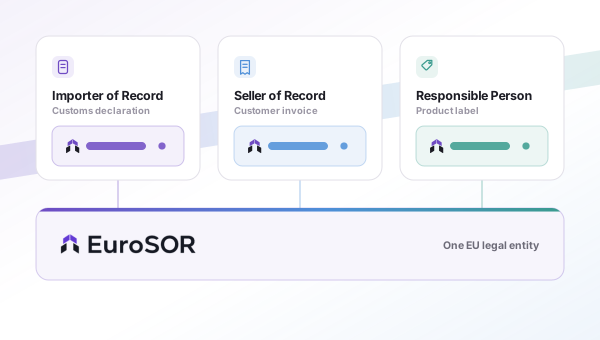
EuroSOR acts as your Importer of Record, Seller of Record and Responsible Person in the EU: one operating layer for import, local selling and product compliance.
Backed by





One EU operating layer. Three legal roles.
You do not need to classify the structure yourself. We map the right combination from your product, inventory flow and sales channel.
EU Importer of Record
Import into the EU without funding import VAT at the border.
We are the named importer on the customs declaration, so qualifying imports can enter through our structure without an upfront import VAT cash outlay.
How our Importer of Record service works ›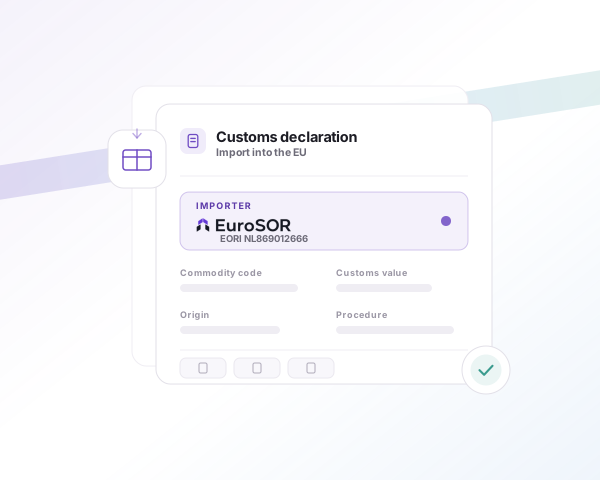
- ↗Our EU customs identity: our own EU EORI appears on the customs declaration
- ↗Customs execution: classification, customs value, origin, documents and broker instructions are structured around one import model
- ↗No upfront import VAT cash outlay: for qualifying imports, import VAT is accounted for through the VAT return instead of being funded at the border
- ↗Release into EU inventory: customs clearance connects directly to the warehousing and fulfilment plan
EU Seller of Record
Sell to European customers through our local taxable entity.
We become the contractual seller, issue the customer invoice, account for the applicable VAT and operate the transaction ledger through to brand settlement.
How our Seller of Record service works ›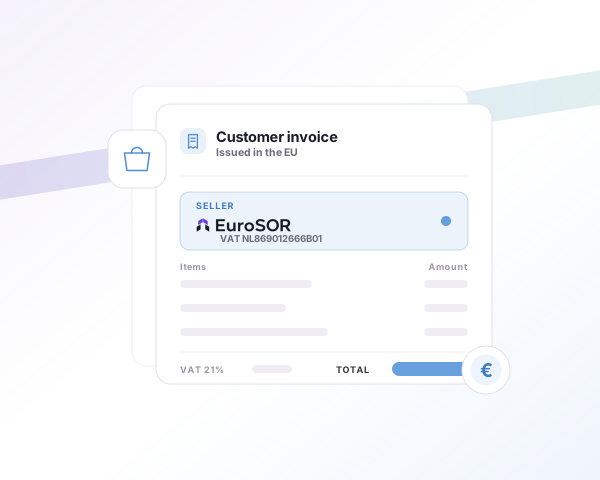
- ↗Local seller: we are the seller named on your EU customer invoices
- ↗VAT and invoicing: transaction treatment, compliant invoicing and statutory reporting run through the Seller of Record structure
- ↗Payment flows: customer proceeds, refunds, chargebacks, fees and taxes are recorded before brand settlement
- ↗Brand control: product, pricing, marketing, storefront and customer acquisition remain with the brand
EU Responsible Person and GPSR compliance
Put the correct EU responsible party behind the product.
We establish the EU responsible-party and product-compliance layer required before products are placed on the market, including the EU economic operator required under the General Product Safety Regulation (GPSR). The role is held directly where our scope permits, or by a named specialist partner where the product regime requires it.
How our Responsible Person service works ›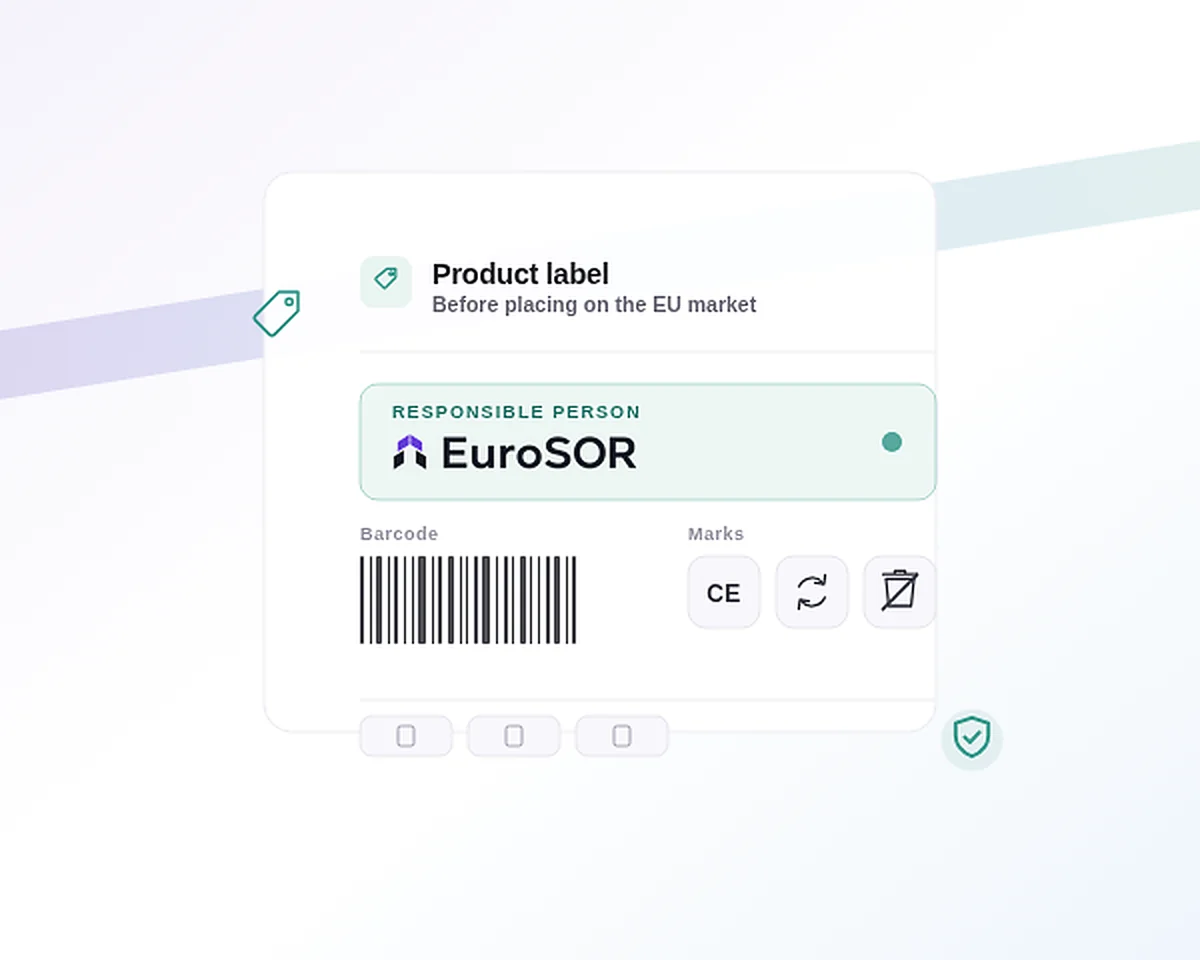
- ↗Responsible Person and authorised representative: the EU economic operator required under GPSR, or the category-specific Responsible Person, is established before launch
- ↗Product readiness: documentation, labels, warnings and category requirements are reviewed before launch
- ↗EPR and packaging: producer responsibility obligations are mapped by product, packaging type and destination market
- ↗Named partner transparency: the specialist legal entity is identified clearly where a category specific third party must hold the role
EU fulfilment and logistics
Expand across Europe through one coordinated logistics layer.
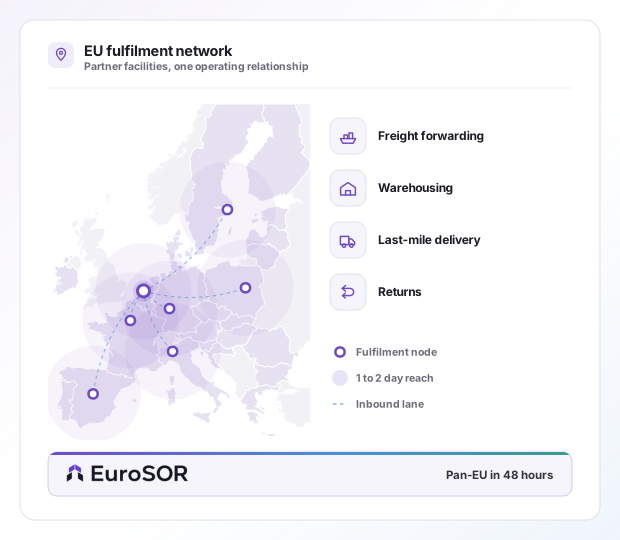
How EU fulfilment works with EuroSOR ›Freight forwarding, warehousing, fulfilment and last-mile delivery are coordinated through partner facilities across Europe. You work through one operating relationship while local specialists execute by geography.
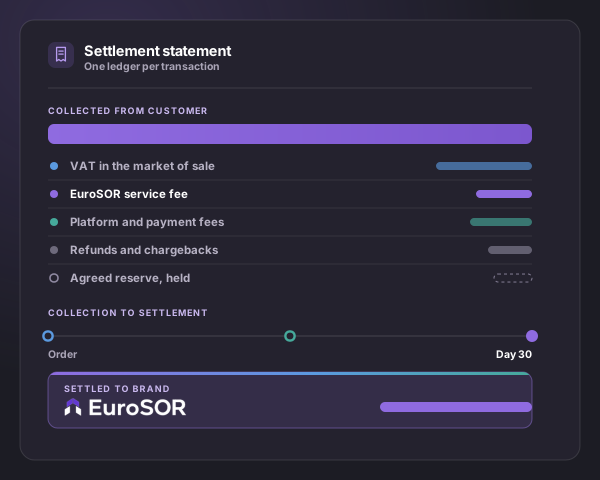
One transaction ledger from collection to settlement.
Where the Seller of Record sits in the flow, customer collections, tax treatment, refunds, chargebacks and brand settlement run through one managed ledger with defined reporting and controls.
See the legal name behind each obligation.
We operate through WareIQ Europe B.V., our Dutch entity. That is the name that appears on customs and invoicing documents.
One legal infrastructure layer across several commercial models.
Import inventory, sell to European consumers, settle VAT and connect the model to local fulfilment without creating a new EU subsidiary first.
Give buyers a local European seller and invoice while connecting inbound stock to wholesale fulfilment.
Build the importer, seller, tax and product-compliance structure required by the relevant channel and country setup.
Give non-EU manufacturers a European import and invoicing structure for distributors, stockists and B2B buyers.
Who receives the customer money, and when does the brand get paid?
Customer proceeds run through the Seller of Record transaction ledger. The service agreement sets the collection route, taxes, fees, refunds, chargebacks, any reserve and the settlement cadence before launch.
What do you need before you can quote?
We normally need the company and ownership structure, product list and HS codes if available, origin, current inventory location, target EU markets, sales channels, expected order volume and value, and the intended customer payment flow.
How quickly can I start selling?
If the product is already EU compliant and no new category registration is required, onboarding can be completed in a few business days. Timelines extend when new registrations, marketplace approvals or physical logistics setup are needed.
Do I need to pay import VAT upfront?
For qualifying imports through our Importer of Record structure, there is no upfront import VAT cash outlay at the border. Import VAT is accounted for through the Dutch Article 23 mechanism. Customs duty remains separate where the tariff and origin make duty payable.
Is a Seller of Record the same as a Merchant of Record?
They overlap, but they are not the same. A merchant of record, the model used by digital-goods platforms, takes on the sale, payment and tax layer. For physical goods, the legal seller also has to connect to customs import, inventory held in the EU and product compliance. Our Seller of Record model is built for physical goods, so the seller role sits alongside Importer of Record and Responsible Person coverage in one structure. Read the full Seller of Record vs Merchant of Record comparison.
Do I need an EU authorised representative under GPSR?
If your company is established outside the EU, most consumer products sold into the EU need an economic operator established in the EU under the General Product Safety Regulation (GPSR). That role can be held by the importer, an authorised representative or a fulfilment service provider. Some categories, such as cosmetics, have their own Responsible Person rules. We confirm which role applies to your product, and who holds it, before launch.
Can every product category use the same Responsible Person setup?
No. Product safety and responsible-party requirements differ by category. Some products can use the standard compliance setup, while others require a category-specific specialist or separate registration. The named legal party is confirmed before launch.
What happens to refunds and chargebacks under Seller of Record?
Refunds and chargebacks are recorded in the transaction ledger and reflected in the next settlement calculation. Allocation rules and any reserve are stated in the service agreement before launch.